

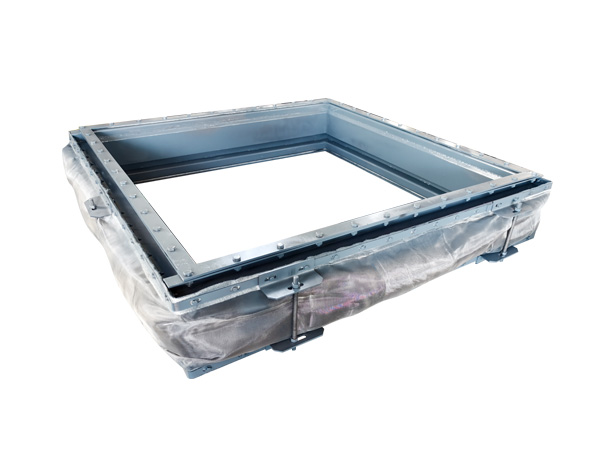
Non-metallic compensator
Non-metallic compensators are key flexible connection components for industrial ductwork and pipeline systems, also commonly referred to as fabric expansion joints. Constructed from multi-layer high-performance composite materials and match...
Non-metallic compensators are key flexible connection components for industrial ductwork and pipeline systems, also commonly referred to as fabric expansion joints. Constructed from multi-layer high-performance composite materials and matched with metal connecting frames, they are engineered to compensate for thermal expansion and contraction, absorb mechanical vibration, and offset installation misalignment of ducts. Featuring outstanding flexibility, heat resistance and corrosion resistance, they are widely adopted in thermal power, cement, metallurgy, chemical engineering, waste treatment and other industries. They are mainly installed on flue gas ducts, hot air pipelines, fan ports and ventilation pipelines carrying high-temperature, dusty and corrosive gas media.
This product adopts a layered composite structure. The flexible main body is composed of high-strength glass fiber cloth coated with silicone rubber, PTFE or fluorine rubber, which delivers excellent airtightness, flexibility and anti-aging ability. The middle layer is filled with high-temperature thermal insulation materials such as ceramic fiber, which effectively isolates heat and reduces heat loss. Metal flanges, frames and pressure plates are fitted at both ends to ensure overall structural stability and reliable connection with pipelines. When the system is running, temperature changes will cause the duct to expand or contract, and rotating equipment such as fans will generate continuous vibration. The flexible body of the compensator deforms freely to absorb axial, lateral and angular multi-directional displacements. Different from metal compensators, it produces almost no reaction thrust, so it will not bring extra load to pipeline supports and equipment foundations.
Non-metallic compensators possess remarkable comprehensive strengths. First of all, the multi-directional compensation capability enables it to adapt to various pipeline displacements and installation deviations, avoiding structural stress damage. Secondly, the special composite materials enable long-term stable operation under high temperature and corrosive flue gas conditions, with strong resistance against acid, alkali and smoke erosion. It also has obvious effects on vibration damping and noise reduction, optimizing the working environment of the whole system. In addition, the product is lightweight and easy to install. The worn flexible fabric layer can be replaced separately without dismantling the whole equipment, which greatly simplifies maintenance work and reduces operating costs. Customized shapes including circular, square and special profiles are available to suit different duct specifications.
In industrial production, non-metallic compensators effectively release the stress of duct systems caused by temperature fluctuation and mechanical vibration. They prevent pipeline cracking, joint loosening and component damage, thus extending the service life of pipelines and auxiliary equipment. With reliable performance, reasonable cost and wide adaptability, non-metallic compensators have become an indispensable supporting part for modern high-temperature gas conveying systems, and are recognized as an ideal flexible compensation solution for various industrial duct projects.