

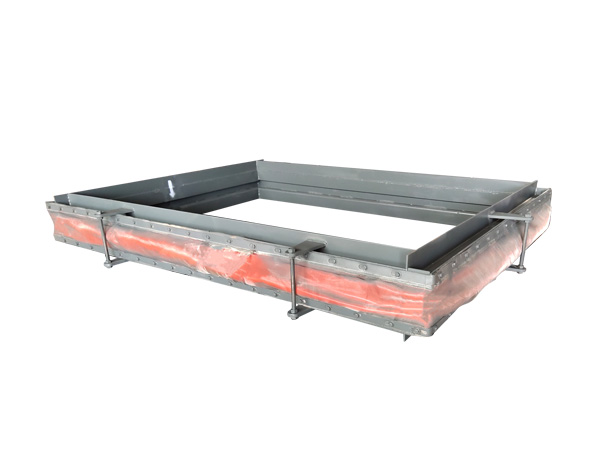
Non-metallic expansion joint
Non-metallic expansion joints, also known as flexible fabric expansion joints, are essential flexible connecting components widely used in industrial ductwork and pipeline systems. Manufactured with high-performance composite fabrics, heat...
Non-metallic expansion joints, also known as flexible fabric expansion joints, are essential flexible connecting components widely used in industrial ductwork and pipeline systems. Manufactured with high-performance composite fabrics, heat insulation materials and metal fixtures, they are specially designed to absorb thermal expansion, mechanical vibration, installation deviation and structural displacement of ducts. Compared with traditional metal expansion joints, this product features superior flexibility, low reaction force, high temperature resistance and corrosion resistance. It is extensively applied in thermal power plants, cement plants, metallurgical enterprises, chemical factories, waste incineration and environmental protection industries, mainly matched with flue gas ducts, hot air pipelines, fan inlets and outlets, and various ventilation systems conveying high-temperature dusty gas and corrosive gas.
The overall structure of a non-metallic expansion joint is reasonably layered. The outer and inner flexible layers adopt high-strength fiberglass coated with silicone, PTFE or fluorine rubber, which guarantees excellent airtightness, flexibility and anti-aging performance. The middle layer is filled with high-temperature resistant thermal insulation materials such as ceramic fiber to block heat transfer and prevent heat loss. Equipped with metal frames, pressure plates and connecting flanges at both ends, the whole assembly maintains stable overall rigidity while retaining flexible deformation capability. During operation, when the pipeline expands or contracts due to temperature changes, or generates vibration and displacement caused by fan and equipment operation, the flexible body of the expansion joint deforms freely. It can effectively absorb axial, lateral and angular multi-directional displacements, buffer vibration and reduce noise, and will not produce large reaction thrust to the pipeline and supporting structures.
This product boasts many prominent technical advantages. Firstly, it achieves multi-directional compensation with strong adaptability to pipeline displacement and installation errors. Secondly, it produces nearly no reverse thrust, which greatly reduces the load on pipeline brackets and equipment bases, lowering the overall engineering cost. Thirdly, the special composite materials enable it to work stably for a long time under high temperature and corrosive flue gas environments, effectively resisting acid, alkali and smoke corrosion. In addition, it has outstanding vibration and noise reduction effects, improving the operating environment of the whole system. The product is lightweight with simple installation procedures; the damaged flexible fabric layer can be replaced separately, which greatly facilitates daily maintenance and cuts operating expenses. It supports customized shapes including round, square and special-shaped sections to fit different duct sizes.
In actual industrial operation, non-metallic expansion joints play an irreplaceable role in protecting pipelines and related equipment. They relieve structural stress of the duct system caused by temperature variation and mechanical vibration, avoid pipeline deformation, cracking and connection loosening, and extend the service life of the whole conveying system. With reliable performance, economical cost and wide applicability, non-metallic expansion joints have become the preferred flexible connecting solution for modern high-temperature flue and air duct systems.