

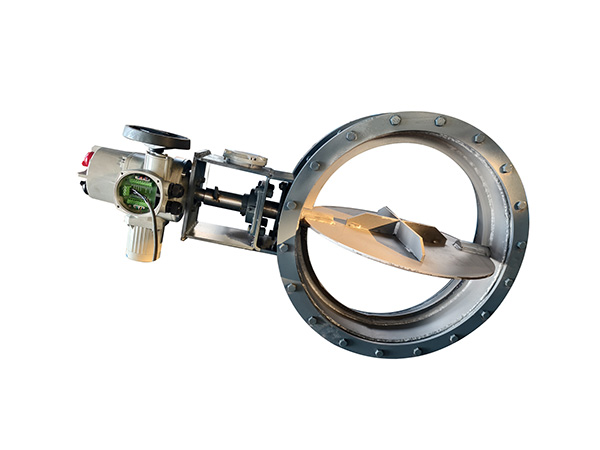
Baffle damper
A baffle damper is a common duct component fitted with fixed or adjustable baffle plates, mainly used to regulate gas flow, balance pressure and distribute airflow in ventilation, flue gas and air delivery systems. It focuses on flow condit...
A baffle damper is a common duct component fitted with fixed or adjustable baffle plates, mainly used to regulate gas flow, balance pressure and distribute airflow in ventilation, flue gas and air delivery systems. It focuses on flow conditioning rather than full shut-off.
Structure & Working Principle
It consists of a rigid frame and multiple parallel baffle blades. The blades can be manually, electrically or pneumatically adjusted to change the opening angle. By altering the flow cross-section and flow direction, it controls flow velocity, adjusts pipeline pressure and evenly distributes medium across the duct.
Key Features
Excellent Flow Regulation: Precisely adjust flow rate and balance system pressure, ideal for airflow distribution.
Low Flow Resistance: Streamlined blade design minimizes pressure loss during operation.
Strong Adaptability: Resists high temperature, dust and mild corrosion, suitable for flue gas and hot air pipelines.
Stable & Durable: Simple structure, wear-resistant parts, long service life and easy operation.
Main Types
Adjustable Baffle Damper: Flexible blade angle adjustment for real-time flow control, widely used in regulating systems.
Fixed Baffle Damper: Blades set at a fixed angle, mainly for permanent flow guidance and diversion.
High-temperature Baffle Damper: Made of heat-resistant materials, for high-temperature flue gas and furnace air ducts.
Typical Applications
Industrial ventilation and air conditioning systems
Boiler, power plant and kiln flue gas pipelines
Dust collection and waste heat recovery systems
Large ductwork for airflow balance and flow distribution