

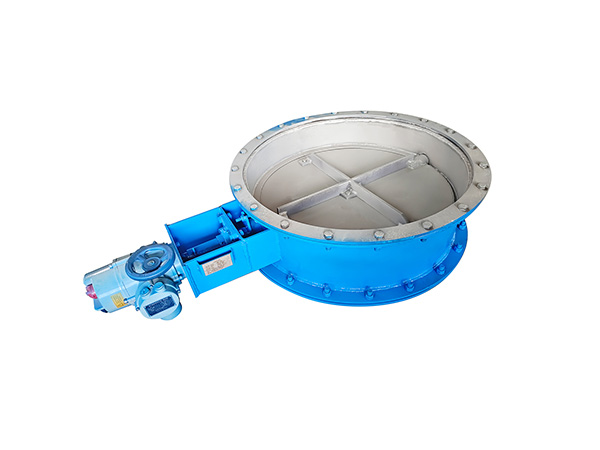
Isolation damper
An isolation damper is a critical industrial duct component engineered to fully cut off gas, air or flue gas flow, providing reliable isolation for pipeline sections, equipment or entire systems. It is primarily used for equipment maintenan...
An isolation damper is a critical industrial duct component engineered to fully cut off gas, air or flue gas flow, providing reliable isolation for pipeline sections, equipment or entire systems. It is primarily used for equipment maintenance, system overhaul and safety interlock in industrial ventilation and flue gas systems.
Structure & Working Principle
It comprises a sturdy frame, sealing assembly, flow blocking parts and actuator. Depending on design, it adopts sliding gate plates, single disc or multi-blade structures. When closed, it creates a tight barrier to separate upstream and downstream media; when open, it keeps full flow passage with minimum resistance. Actuation options include manual, electric and pneumatic.
Key Features
Superior Sealing Performance: Low or near-zero leakage, meeting strict isolation requirements for hazardous and flue gas media.
High Adaptability: Resists high temperature, dust and corrosion, fits harsh working conditions of flue ducts and furnace pipelines.
High Safety & Reliability: Rigid structural design, stable operation, equipped with interlock function to avoid misoperation.
Easy Maintenance: Simple internal structure, few vulnerable parts, convenient for daily inspection and repair.
Common Classifications
Gate/Guillotine Isolation Damper: Best for absolute shut-off, the top choice for major equipment maintenance.
Butterfly Isolation Damper: Compact size, suitable for medium and small pipelines with general isolation demands.
Louver Isolation Damper: Matches large-diameter ducts, applied to large-volume gas pipeline isolation.
High-temperature Isolation Damper: With heat-resistant lining, for high-temperature flue gas and hot air systems.
Main Applications
Power plants, industrial boilers (flue gas pipeline isolation)
Cement, metallurgy, chemical plants (furnace and kiln system isolation)
Waste incinerators, environmental flue gas treatment facilities
Central ventilation, dust collection and process gas delivery systems